Jackdaw: A response from Earthwatch
The Jackdaw gas field, located in the North Sea, has been approved for development, reigniting debate about the UK’s energy security, climate commitments and continued reliance on fossil fuels. In this response, Earthwatch CEO Harry Barton shares his perspective on what the decision means and why investment in renewable energy remains vital to a sustainable future.
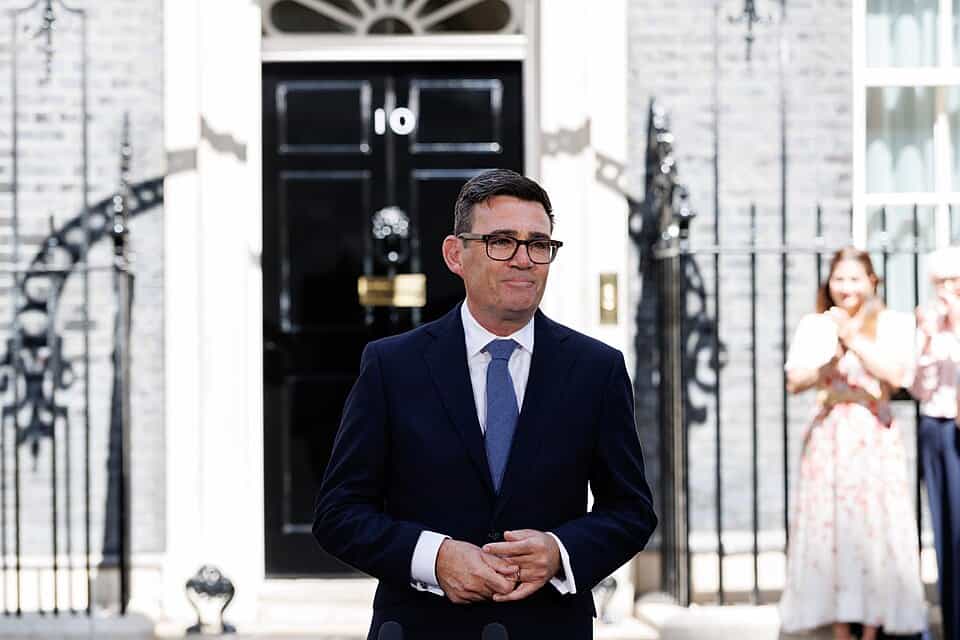
Last week, the government announced its long-awaited decision on the Jackdaw gas field in the North Sea. The last Conservative government had granted a licence back in 2022, but the project was then held up by legal challenges. Now Andy Burnham’s government has given the green light, prompting shouts of celebration from some and howls of protest from others.
Jackdaw is 150 miles east of Aberdeen and holds 10 million cubic metres of gas. Over the next decade it will feed this into the UK gas network, with government officials saying it could be being burned in British homes within a year.
The arguments around Jackdaw are politically and economically complex, and this may be partly why the decision has been a while in coming. We face multiple challenges when it comes to energy. There’s the obvious issue of cost, which is uppermost in many people’s minds. Recent research by the think tank More in Common showed that the cost of living is consistently the top concern at a national level among supporters of all major political parties, with immigration and the NHS in second and third place. Energy security is another, brought into stark relief by the conflicts in the Gulf region and Ukraine. And then, of course, there’s the underlying climate crisis.
On the surface, the case for proceeding with Jackdaw sounds quite reasonable. Oil companies argue that they’ve already invested heavily, having been given permission by a previous government. Why stop now when the job is already nearly done? Reliance on fossil fuels will continue for some time they stress, and surely, it’s better to rely on our own gas than Russia’s? Plus, the gas from Jackdaw can come online in a year as it’s a so-called “tie back” using infrastructure already in place to service other fossil fuel extraction in the area. What’s more, tax receipts from the project will help fund renewable energy projects elsewhere.
But look closer and Jackdaw’s contribution towards the first two energy challenges we face is questionable. Adura, a joint venture that is leading the project, claims that it will supply 6% of the UK’s gas supply at its peak. Others however, including the campaign group Uplift, have argued that the contribution only amounts to 2% when averaged out over the expected 11-year operating lifespan of the project. The BBC gives an even lower figure of 1.6% based on North Sea Transition Authority’s official forecasts of anticipated energy use over the next decade. Whatever the true figure, Jackdaw’s contribution, while clearly not insignificant, is hardly game changing. And the government itself has been keen to stress that the extra supply won’t lower gas prices this winter.
“however you look at it, the optics of a decision to invest in more fossil fuel extraction by a government committed to net zero don’t look good”
What about the arguments in the context of climate change? Some have claimed that the impact on the UK’s carbon emissions will be minimal because it is demand, rather than supply, which is the main driver. But however you look at it, the optics of a decision to invest in more fossil fuel extraction by a government committed to net zero don’t look good.
This summer should remind us of the true costs of continuing our reliance on fossil fuels. A study by the Grantham Research Institute, based at the London School of Economics, has suggested that, under current policies, the cost of climate change to our economy will be 7.4% of GDP by 2100. In a related study by Global Witness, the costs of climate breakdown in the UK amount to an estimated £3,000 per household over the course of last year alone, or a whopping £1.1 trillion worth of damage to the UK economy over the next decade.
An equally chilling report came from the UK’s recent National Security Assessment on Global Ecosystems. The intelligence bodies behind the report are hardly dyed-in-the-wool greenies, yet their findings on the risks to national security and prosperity from ecosystem degradation were stark. The assessment highlights threats to food and water supplies, public health and supply chains, as well as the potential for economic insecurity and geopolitical instability were so stark that the previous government sought to suppress them.
There’s something else going on here, though, and it came to light in a conversation I recently had with a senior executive from a major oil company. It’s hard for these companies to make money in renewables. The pipeline for new projects is long, projects can be held up by planning decisions and other factors, and competition from companies in China and elsewhere is intense. It’s far more profitable for them to invest in oil and gas extraction, especially when prices are high. And in the world of lobbying, few have more persuasive power than the fossil fuel industry.
Jackdaw is a relatively small project, and while I believe it’s the wrong decision, taken for questionable reasons, it’s the message it sends about investment priorities that matters as much as anything. The government is about to face a much more significant decision, though, in relation to the far larger Rosebank oilfield. There are an estimated 500 million barrels lurking in this huge area, 80 miles north-west of Shetland. Supply won’t come online for some years, and when it does, it won’t necessarily help the UK directly: the oil will be sold on the international market. And that highlights another misconception with these projects. It may be tempting to talk about having control over “our oil” and “our gas,” but the reality is that, even if they are located in British waters, these resources often aren’t ours in any practical sense, any more than the fish in the surrounding seas belong to us more than they do to France, Norway or the Netherlands.
As humans, we are invariably biased towards the tangible, the close and the immediate in our choices. A quick material gain for me tomorrow always carries more weight than a much larger related cost that may be felt by someone, somewhere in the distant future. But a hundred individual, incremental decisions in the wrong direction make for one gigantic problem. This is one, potentially two, more such decisions.
If we’re serious about net zero, let’s not be swayed by arguments that tempt us away from that goal. Let’s invest in speeding up the pipeline for new renewable projects, in better grid connections, and in battery technology to stabilise supply. These will also create jobs, increase our energy security, reduce pollution and help lower prices. This won’t happen overnight, but every right step we take brings us closer to a truly sustainable energy future that we can all benefit from.
(Image: Deepsea Delta oil drilling rig in the North Sea. Credit: Erik Christensen)