‘Like a huge oak tree, he’s always been there…’ – a birthday tribute to Sir David Attenborough by CEO Harry Barton
You can’t have missed that Sir David Attenborough is celebrating his 100th birthday. Here, Earthwatch CEO (and lifelong Attenborough fan) Harry Barton reflects on how Sir David inspired his passion for nature growing up, and why his message and lessons remain as important as ever.
Each of us has our own special memories of what first turned us onto nature. I was lucky enough to spend my early childhood on the banks of the Thames in Richmond, where I remember netting tadpoles and minnows, watching the river swell and shrink with the tides, and the banks erupt with life in spring. Little did I know that a rather more famous resident lived a mile or so up the road.
We bought a colour television in about 1973, and from the age of around eight I remember my weekly must-watch was a documentary on BBC2 on Sunday evenings, The World About Us. I don’t recall any particular episode, but I do remember being drawn into an enthralling world beyond – of deserts, mountains, jungles and the strange and wonderful life they contained. The name would have meant little to me at the time, but this programme was the brainchild of David Attenborough.
A few years later and Sir David had become a household name. I was only 11 years old when Life on Earth was first aired in January 1979. I remember everyone being glued to the television – this was filming like we’d never seen before, as enthralling in its storytelling as for its stunning visuals. There was a sense of excitement around the series that it was hard to put your finger on, the feeling that this was something special, unprecedented.
“I remember everyone being glued to the television – this was filming like we’d never seen before, as enthralling in its storytelling as for its stunning visuals.”
The various series that followed marked key points in my life – The Living Planet while I was doing my A-levels, The Trials of Life as I left university, The Life of Mammals just after we’d had our first child. Each was more extraordinary than its predecessor. Watching birds plunging into the sea from underwater, or crabs scuttling into a hole towards a hidden camera placed at the bottom… I lose track of all the jaw-dropping moments. I even had the privilege of seeing some preliminary screenings of The Private Life of Plants just after I started working at the Royal Botanic Gardens, Kew in the mid-1990s. Plants are not as immediately captivating as a pride of lions on a hunt, and I recall time-lapse wizardry playing a big role.
Others will be far better qualified than I am to explain why Sir David’s work stands so far apart from the crowd. Scale, ambition and filming brilliance aside, I’m struck by how his work is always grounded in scientific order. It’s as if, however magical the story and emotionally engaging the characters, a fundamental grounding in taxonomy, ecological processes and natural history is always there. We may be unable to switch off our TV screens, but this is never merely entertainment. And of course, there’s the quiet but authoritative voice of reason, realistic about the threats but always tinged with optimism, keeping the flame of our convictions alight.
We still have so much to learn about the natural world. When I was working on the Millennium Seedbank project at Kew Gardens in the 1990s, we frequently quoted a figure of 250,000 flowering plants in the world. By 2016 Kew was using a figure of 369,000 – a 48% increase in 20 years. And flowering plants are among the best studied groups of living creatures. How about the uncounted millions of insects and invertebrates? It would take another Attenborough series Life in the Undergrowth to draw us into their bizarre, tiny and sometimes terrifying universe.
“Studying the world around us has always been central to Earthwatch’s role, in particular engaging non-scientists in the process.”
Studying the world around us has always been central to Earthwatch’s role, in particular engaging non-scientists in the process. Our logic is that, while we can’t all be experts, we can all help in the quest to understand our extraordinary planet and ultimately protect it. Science and a basic understanding of living processes is central to this. I’m proud that we’ve managed to engage thousands of people since we started in 1971, many of whom have gone on to become authorities in their fields. Sir David’s achievements are on a different scale though – his work has engaged tens of millions. And much of this has happened when he was well past normal retirement age.
I find it impossible to overstate the impact Sir David has had on my understanding of and delight in the natural world. Like a huge oak tree, he’s always been there. And at 100, he shows no obvious signs of tiring. I can only hope we see plenty more of him, and right now we need his calm, reasoned and authoritative presence more than ever. Maybe the best is yet to come!
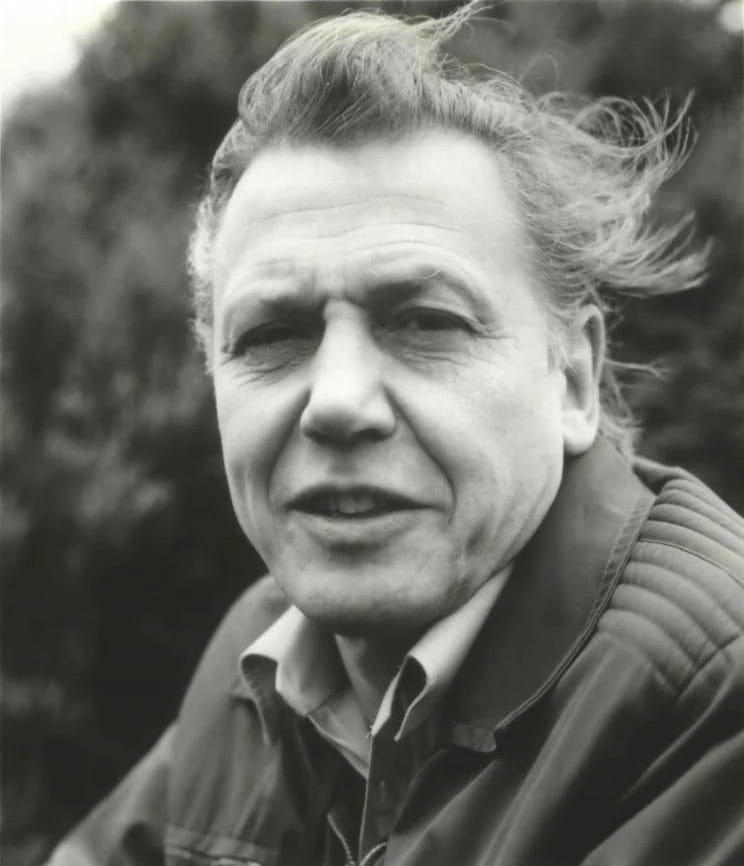
(image: Wikimedia Commons licence)