
Beneath the surface: what we’re learning about our rivers
11th June 2026
The results from our Spring Great UK Waterblitz are now in and available in this report. Earthwatch CEO Harry barton was one of 4,700 people who became citizen scientists for the weekend and collected the data from their local waterway.
I seem to be blessed with good luck when it comes to testing my local water course. Every time I’ve done it, I’ve been treated to a cloudless blue sky. The morning of April 24th was no different as I ventured out just after 6 am.
For much of the last six months, Devon had been pounded by incessant rain. Turbid streams and rivers, stained reddish brown with soil ripped from waterlogged fields or Guinness black with peat from the cloud-hidden hills, hurtled down the valleys. But today the Harbourne river, which flows off Dartmoor and passes a mile and a half from my house, made a contented gurgling sound that blended with the dawn chorus.
I felt somewhat conspiratorial as I clambered from the bridge down to the water’s edge. Perched on the protruding root of an oak tree, I filled my flask with clear water. I’ve seen this river in many moods and colours, but today it was gin clear, the emerald weed growing out of polished gravels spread fan-like across its bed, and insects darting over the ripples and eddies. It felt as bucolic as the Wind in the Willows.
“Every year more people take part in the Great UK WaterBlitz. The numbers are still modest, but each new participant and datapoint increases our understanding. It builds a network of people more connected to their rivers, aware of the impacts we have on them, and motivated to act.”
My sample passed its tests with flying colours, with the lowest levels of nitrate and phosphate on the scale, and almost neutral in terms of its acidity. pH, a measure of acidity-alkalinity, is a new addition to our tests this year and a crucial indicator of health. Low pH (acidic) water can harm fish and aquatic life, and release toxic metals. It also influences how damaging high phosphate levels can be.
Many of Dartmoor’s rivers suffer from the effects of historic mining, with lead and arsenic notable offenders. A combination of weather and geology means the soils are naturally acidic, and this influences the rivers too. My tests couldn’t tell me if these metals were present, but the neutral pH gave some reassurance.
The river Harbourne winds 12 miles from the granite slopes of Dartmoor to the muddy creeks of the Dart’s tidal estuary. The section I tested passes under a main road and a railway viaduct. While I don’t know what impact the railway might be having, we do know something about road runoff.
Last year Earthwatch led a citizen science project on the river Evenlode in Oxfordshire. It found a cocktail of chemicals, including 70 from car tyres, washed off busy roads. Four of these are known to be toxic to aquatic life and were found at concerning concentrations, while others can build up in living tissues over time.
“A positive result doesn’t necessarily mean there isn’t an underlying problem.”
My results are a reminder that these tests are a snapshot in time. On that April morning there was little traffic and the road was dry after a week of easterly winds, so I would be surprised if such a cocktail could be found here. But after heavy rain and rush hour traffic, it could be a very different story. A mile downstream, testing would also pick up effluent from an intensive cattle farm. A positive result doesn’t necessarily mean there isn’t an underlying problem.
The more we test our rivers, the more we find. One issue gaining attention is pesticide treatments for pets. There are 22 million pet dogs and cats in the UK, and around 80% receive at least one flea treatment every year. These chemicals can wash into drains and waterways. A single dose contains enough toxin to kill 25 million bees.
A study by SongBird Survival and the University of Sussex tested feathers from common birds such as blackbirds and chaffinches. Every sample contained pesticides from flea and tick treatments. These chemicals are designed to kill insects and some are known to affect chick development. There are likely wider impacts we don’t yet fully understand.
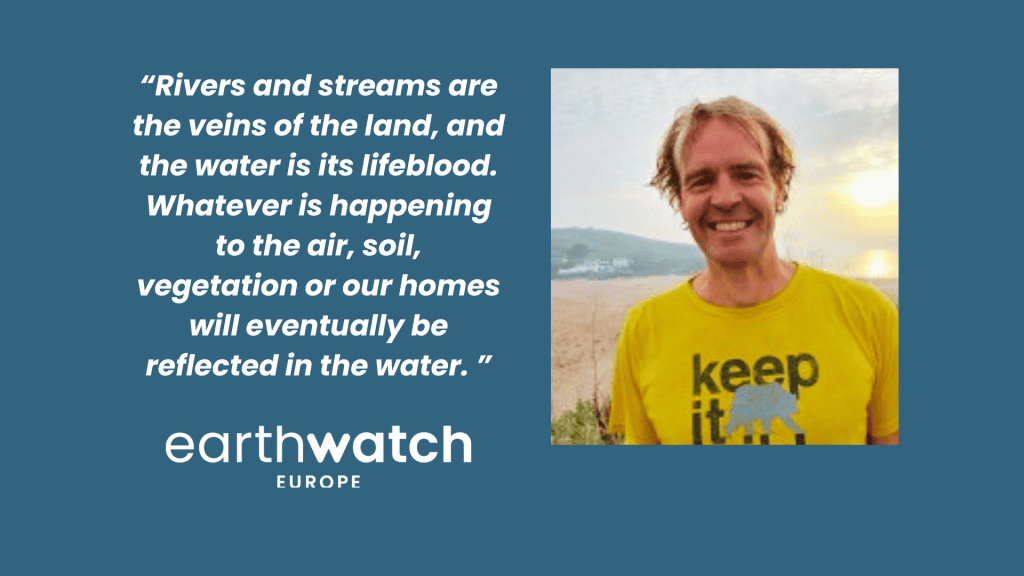
These substances don’t just affect wildlife. Most samples also contained chlorpyrifos, banned for agricultural use in the UK due to risks to children’s cognitive development, yet still available over the counter for pet treatments. Even restricting their use to cases of infection would significantly reduce pollution. Rivers and streams are the veins of the land, and the water is its lifeblood. Whatever is happening to the air, soil, vegetation or our homes will eventually be reflected in the water. Like the human body, sensing that something isn’t right may be easy, but understanding the causes can be complex.
“My results form a tiny part of a national picture that shows our rivers remain in poor health. The picture is slightly better than six months ago, but it’s too early to draw firm conclusions.”
My results form a tiny part of a national picture that shows our rivers remain in poor health. The picture is slightly better than six months ago, but it’s too early to draw firm conclusions. This isn’t just about data, important though that is. One of the reasons I take part is the joy of it—getting my hands in the water, my eyes level with the river. It creates a deeper connection, a cerebral version of immersing yourself in cold sea water, with that mix of thrill and chill.
Every year more people take part in the Great UK WaterBlitz. The numbers are still modest, but each new participant and datapoint increases our understanding. Just as importantly, it builds a network of people more connected to their rivers, aware of the impacts we have on them, and motivated to act.
We are still a long way from turning around the state of so many of our rivers, but the road to recovery may just be getting closer.
More info:
Click here to check out the Spring 2026 Great Waterblitz report>