
Tiny Forests deliver social value – officially
19th March 2026
Last month, a new Tiny Forest was planted in Bristol. But this one marks a first: it’s the first Tiny Forest in the UK whose social value has been formally quantified using a UK government model.
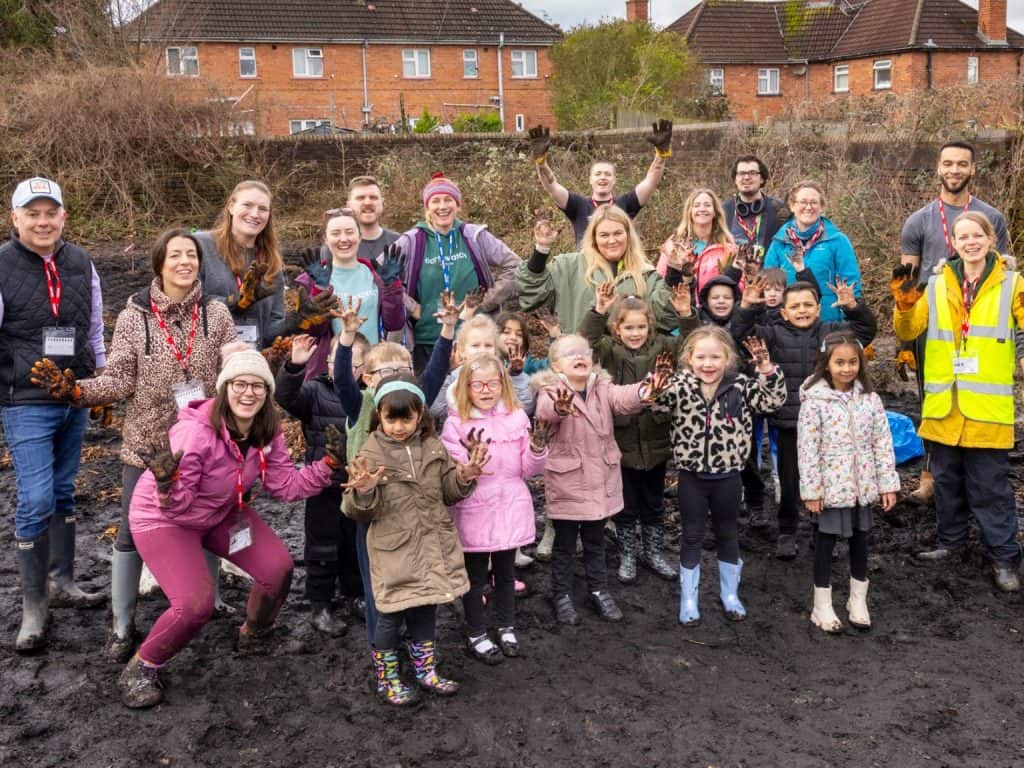
The new forest of 600 trees is located in a neighbourhood where many residents have limited access to safe, high-quality green space. The planting event in February brought together children of Oasis Academy Connaught School, community representatives and collaborators Amazon Web Services (AWS), NiCE and Route 101.
We reached this milestone in partnership with Carbon Heroes, the UK’s first urban nature finance platform. Their work focuses on turning urban trees and forests into a robust social value asset class.
Working with local authorities and public-sector suppliers, Carbon Heroes quantifies the environmental and wellbeing benefits of urban trees in line with HM Treasury’s Green Book and PPN 002, enabling businesses to fund climate-resilient cities while delivering tangible community impact.
Earthwatch was delighted to work alongside Carbon Heroes in their collaboration with AWS, NiCE and Route 101, which resulted in the inclusion of a Tiny Forest as part of the social value submission of a central government bid.
For Carbon Heroes CEO Violette Castagné, the project shows what urban nature investment can achieve.
“This small plot of land in Bristol has been turned into a long-term social value asset that supports climate resilience, community wellbeing and local environmental goals.”
Violette Castagné, CEO of Carbon Heroes
Carbon Heroes uses their own data-driven platform, through which they can quantify the environmental and health benefits of this forest in line with PPN 002 and the Government’s Social Value Model. For Violette, “urban trees and Tiny Forests are some of the most powerful ways to deliver measurable social value where people live and work.”
Over the next two years, the Oasis Connaught Tiny Forest aims to generate more than 200 volunteer hours and engage 230 local children and community members through environmental education, citizen science and hands-on climate action.
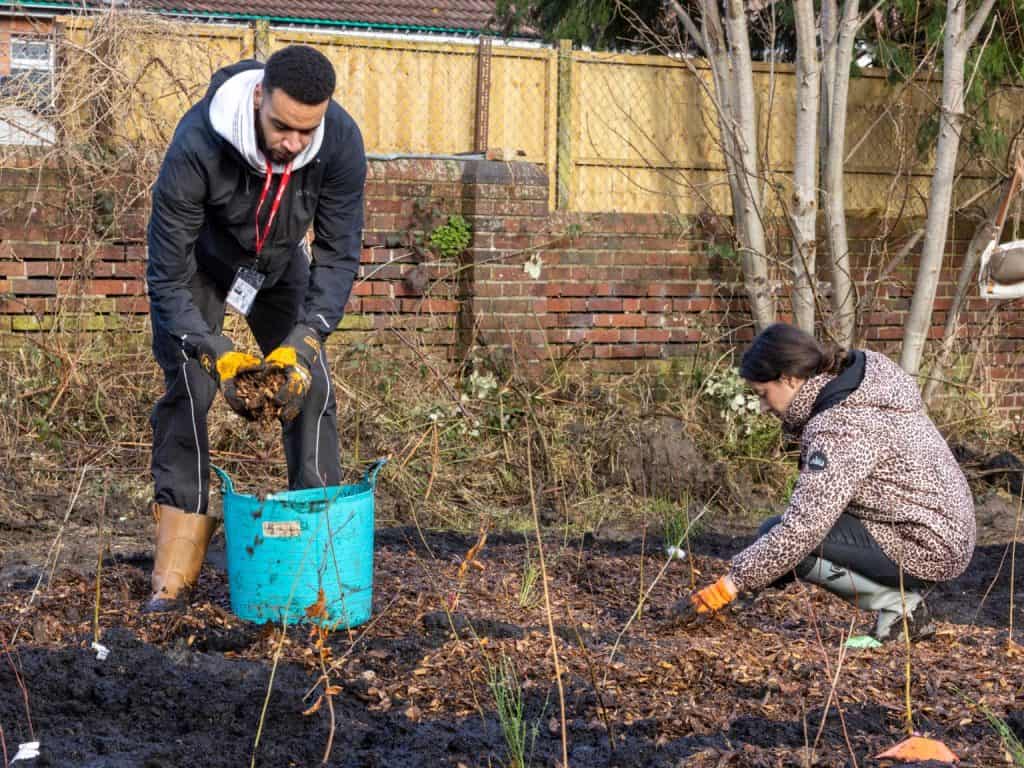
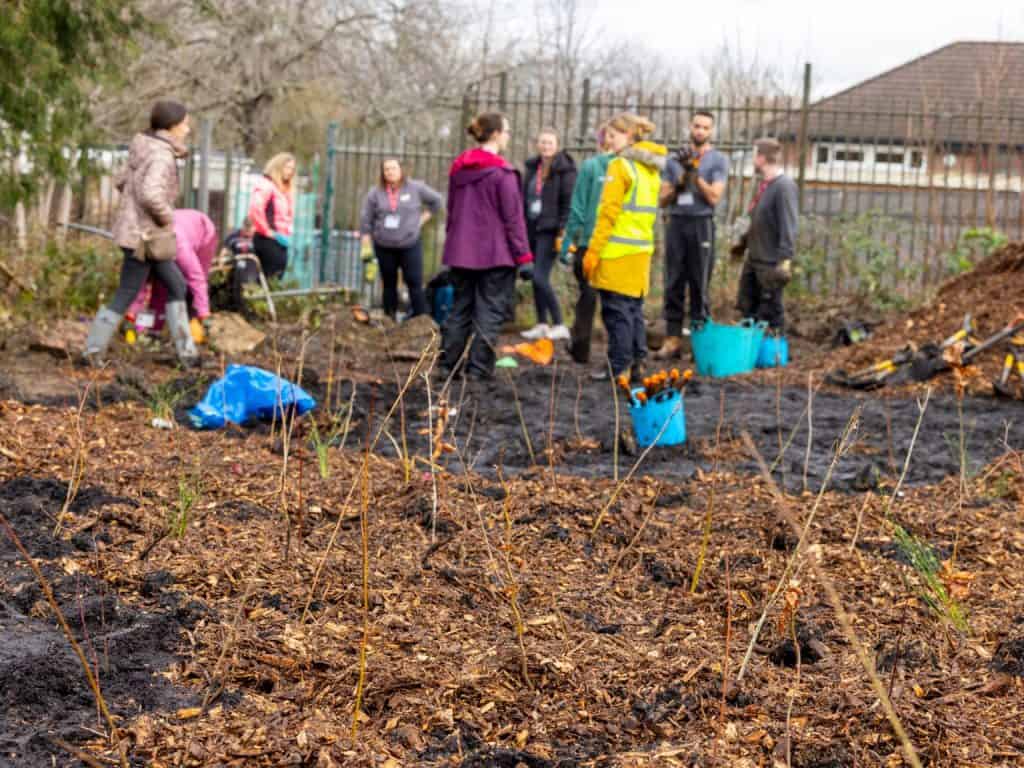
The Earthwatch team will lead a programme of community and school activities, including planting days, biodiversity surveys and climate resilience monitoring. Local volunteers, school staff, pupils and employees from AWS, NiCE and Route 101 will all be invited to take part, building a sense of collective ownership and long-term stewardship.
Over the lifetime of the forest, the site will:
- Provide a new, accessible green space at the school for pupils, families and local residents
- Improve local environmental conditions through carbon storage, better soil infiltration and air pollution reduction
- Support outdoor learning, Science, Technology, Engineering and Mathematics (STEM) education and green skills development for pupils and young people
- Offer structured volunteering opportunities to build community connection.
Urban green spaces are vital infrastructure for climate resilience, especially in dense neighbourhoods with limited access to nature. Tiny Forests grow faster than conventional woodland and can help cool cities, improve air quality, reduce flood risk and create habitat for hundreds of species.
Just as importantly, they provide a nearby, welcoming space where residents can relax, learn and connect with nature.
It may be tiny, but this forest’s impact on the community – and how we value urban nature – could be huge.
Tiny Forest
Bringing the benefits of woodlands into the heart of our cities and urban spaces: connecting people with nature, helping to mitigate the impacts of climate change, as well as providing spaces to support wildlife. Tiny Forests are about community. They are planted, maintained and monitored with the help of local volunteers, businesses and schools. The latter can use their Tiny Forest as an outdoor classroom.