
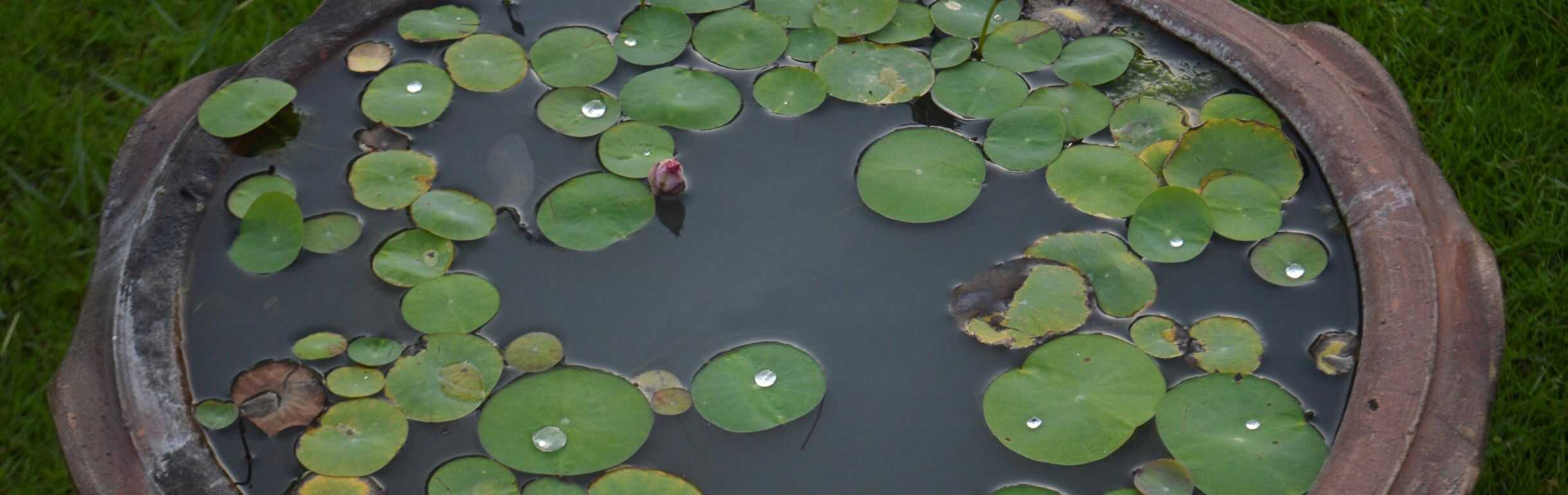
Make a mini pond
If your outdoor space is limited, it’s easy to install a mini pond instead of digging a large one, using a container of water.
Even small water sources can be beneficial for wildlife, so consider a mini pond if you don’t have a lot of outdoor space.
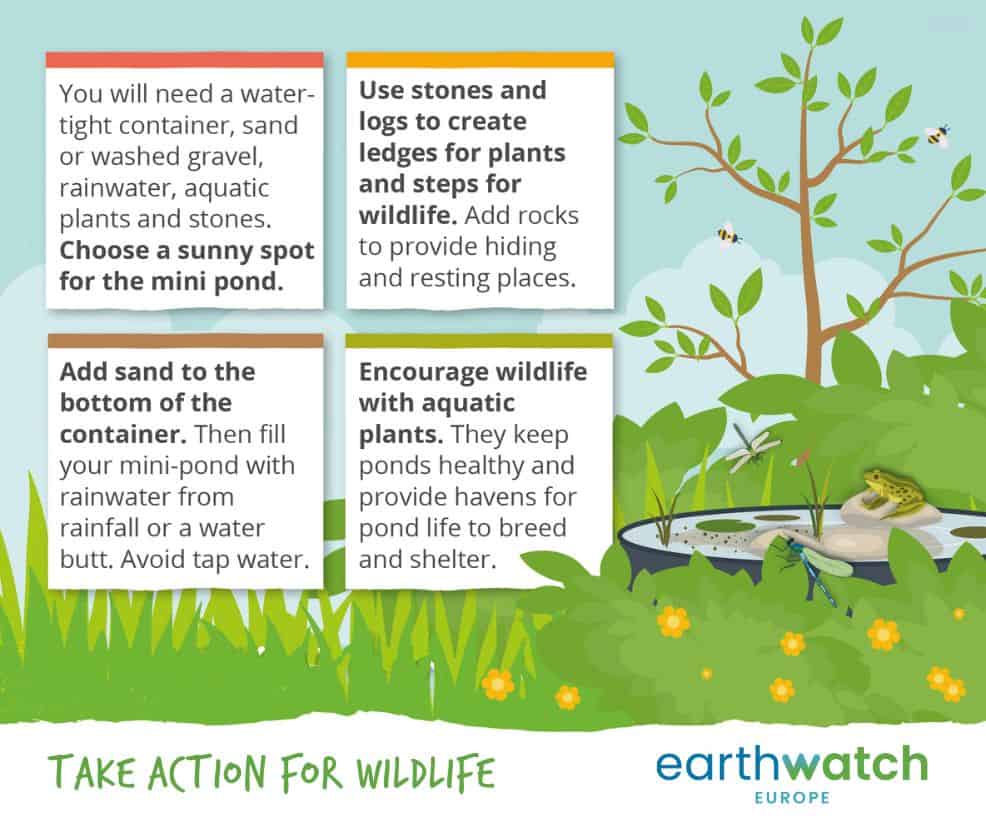
What you need for your mini pond
- A large, water-tight container
- Sand or washed gravel
- Source of rainwater (such as a water butt)
- Aquatic plants
- Pebbles/stones
Step 1: Location
Old kitchen sinks, tin baths and large plastic bowls make perfect mini pond containers. An ideal site would be in a fairly sunny area of your outdoor space and it shouldn’t be near trees, as this will cause issues with leaf fall in autumn.
Make sure that your container is clean and that any gaps are sealed, then put it into a level position as it will be much more awkward to move when full of water.
Step 2: Preparing your pond
By using stones, logs or other items, you can create ledges for plants and ‘steps’ for wildlife access – this is essential to ensure that the pond is not a trap for animals.
Adding rocks will provide hiding and resting places for a variety of species. Plus, if you want to make your mini pond look more natural, then you can add sand or clean gravel to the bottom of the container.
Step 3: Just add water
Now you are ready to fill your mini pond! Tap water contains a large amount of nutrients that can be harmful to wildlife and result in the presence of algae, so it is better to avoid this and use rainwater to fill up your mini pond – either through direct rain or a water butt.
Step 4: Encouraging wildlife
Aquatic plants help to keep ponds healthy and provide havens for wildlife to breed and shelter. Finally, just watch and wait! It’s surprising how quickly wildlife can find a new pond and begin setting up home.
Don’t forget to supervise young children around ponds, or alternatively you can buy a mesh safety cover.
Nature in Cities newsletter
Use the form below to subscribe to our Nature in Cities monthly email newsletter. We share seasonal wildlife facts and blogs, and how you can connect with and take action for nature.