

Create compost
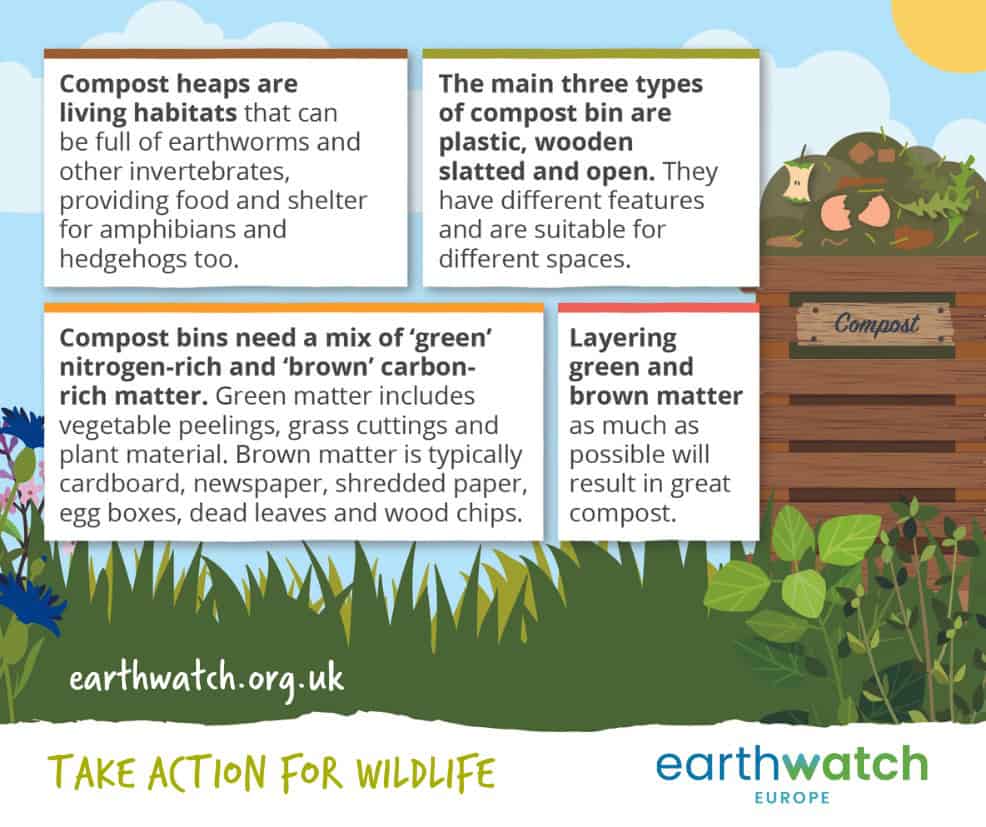
Compost heaps are living habitats that provide food and shelter for all kinds of wildlife, including earthworms, other invertebrates, amphibians, and hedgehogs. Here’s how to create compost.
Open compost bins and heaps make attractive nesting sites for hedgehogs. Cold-blooded creatures, such as slow worms and grass snakes, often visit such sites to take advantage of the heat released by decomposition.
Composting your garden waste is free and easy to do, producing compost for your garden and providing benefits to wildlife.
Types of compost heap
There are many ways to compost, so choose one or more methods that suit your outdoor space, both in terms of size and aesthetics. The main three types are:
Plastic bin

- Composts quicker because the heat is retained
- Ideal for a small space
Wooden slatted bins

- Allow wildlife to climb in and out easily
- More natural-looking
Open heaps

- Allow wildlife to climb in and out easily
- Works well in a larger space
How to create compost
You can buy compost bins made from slatted wood or you can make your own using wooden pallets. The compost bin should ideally be at least 1m x 1m x 1m to allow the heap to heat up, and also be resting on soil.
Temperatures can reach as high as 50 – 60°C. Putting carpet over the top of an open compost bin can help retain heat and speed up the decomposition process.
What to put in your compost bin
Compost bins need a mix of ‘green nitrogen-rich’ and ‘brown carbon-rich’ matter. The finer you shred the material before putting it into the compost heap, the quicker it will rot.
- Green matter includes vegetable peelings, grass cuttings and plant material.
- Brown matter typically comprises of cardboard, newspaper, shredded paper, egg boxes, dead leaves and wood chips.
- Don’t add meat, cooked food, dairy products or pet waste; if you avoid these you are much less likely to get rats visiting your heap!
How to maintain your compost bin
Layering green and brown matter as much as possible will result in great compost.
Turning or forking over the compost speeds up the process, but isn’t essential, and be careful if you do so as many animals may be living in the heap.
Within a year, you can spread the rich, fine compost over your soil and anything that is not fully rotten can simply go back on the compost heap.
Subscribe to our newsletter
Do you want to learn more about wildlife and how you can help nature on your doorstep? Every month in our newsletter, we share seasonal wildlife facts and blogs, and how you can connect with and take action for nature. Use the form below to subscribe.