Evenlode Catchment Partnership – 2024 Water Quality Report
The Evenlode Catchment Partnership, in collaboration with Earthwatch Europe and citizen scientists, conducted extensive monitoring in 2024 to understand the water quality challenges in the River Evenlode catchment. This report highlights the significant negative impact of sewage treatment works and agricultural runoff on the catchment’s water quality.
Key findings
- No waterbodies in the Evenlode catchment achieved good ecological status in 2024, with water quality generally decreasing from headwaters to the confluence.
- High nitrate concentrations, primarily from agriculture, are compounded by high phosphate concentrations downstream of sewage treatment works.
- Sewage treatment works are a major contributor to phosphate pollution, accounting for 65% to 83% of the average phosphate contribution across the catchment. Water quality significantly decreases below STWs, and the flow in receiving water bodies is often insufficient to mitigate daily STW discharges.
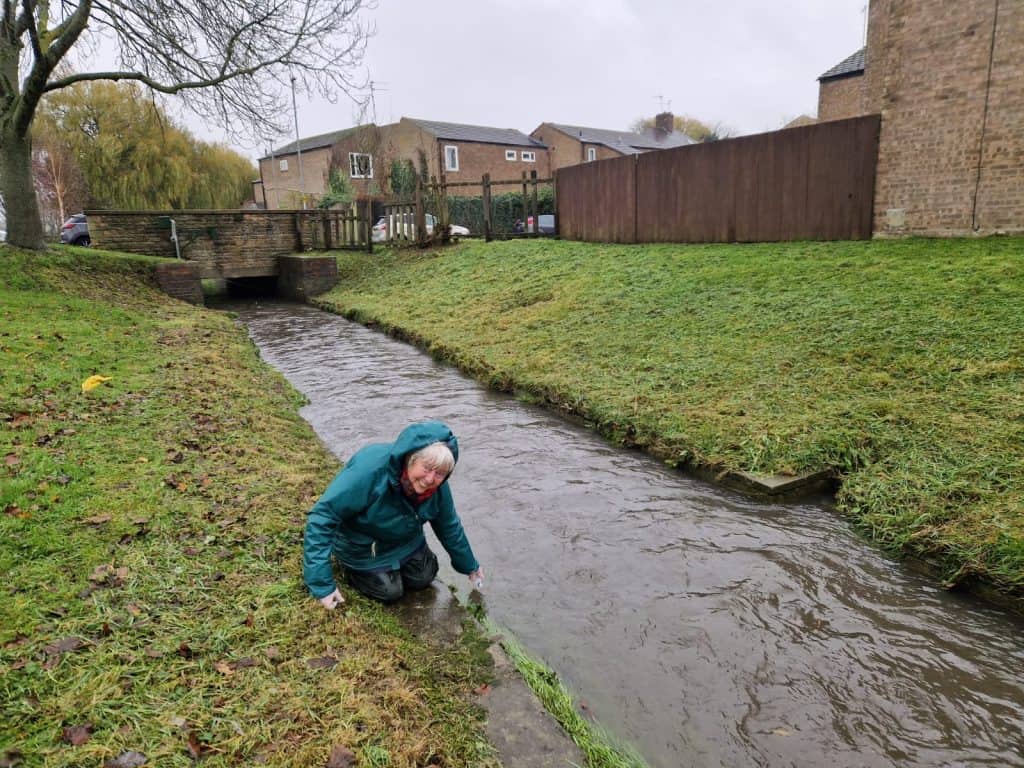
- Citizen science monitoring, including FreshWater Watch (FWW) and Riverfly surveys, significantly increased in coverage and confirmed the findings of poor water quality also reported by the Environment Agency (EA).
- Road runoff contributes various chemicals to waterways without treatment. PFAS are also a significant concern, with dangerously high levels found in fish and surface water downstream of the Fire Service College near Moreton-in-Marsh.
- Preliminary studies show that constructed wetlands have a notably beneficial effect on reducing phosphate and ammonia concentrations, even in early stages of establishment, indicating their potential for wider use in water quality improvement.