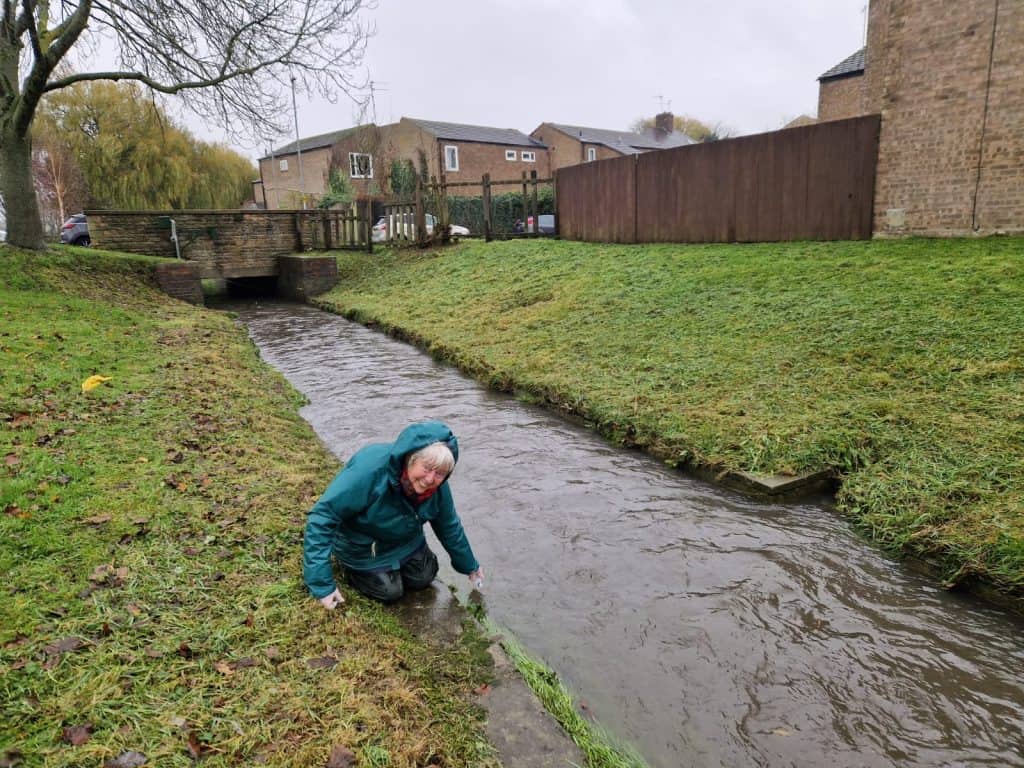
Metal and chemical pollution in the River Cherwell are cause for public concern
We coordinated an independent report which has revealed concerning levels of pollution in the River Cherwell near Kidlington. However, the source of the pollution is thought not to be a large illegal waste dump discovered in late 2025, as elevated metals and toxic chemicals were found upstream of the site.
The new findings point to road runoff rather than waste as the primary pollution source. The collaborative investigation also revealed that the baseline condition of the river is cause for public concern.
The fly-tipped waste mound – approximately 150 metres long and six metres high – was discovered on farmland between the River Cherwell and the A34.
Although concerns were raised about potential contamination of the river, independent sampling carried out by trained members of the community, known as citizen scientists, found that concentrations of several metals and chemicals were not higher downstream of the landfill site compared to upstream.
However, the River Cherwell is already polluted before it reaches the landfill, the study concludes, reflecting the wider pressures facing UK rivers from urban runoff, agriculture and sewage discharges. Tackling these challenges requires collaboration, transparency and public participation.
Earthwatch, as an Oxford-based charity, worked in collaboration with freshwater charities Thames21 and Friends of the Thames to deliver the study, and were supported by laboratory analysis from Artemis Analytical and Emissions Analytics.
Dr Sasha Woods, Director of Science and Impact at Earthwatch Europe, said:
“This study demonstrates the power of citizen science to generate robust data, challenge assumptions and support evidence-based decision-making. We urge authorities to work with communities to integrate citizen science into national freshwater monitoring frameworks, and we encourage volunteers to continue championing the health of their local rivers.”
Dr Claire Robertson, Catchment Manager at Thames 21, said:
“Whilst this study gives some reassurance that chemicals from the illegal landfill are not yet polluting the River Cherwell, it just highlights how this lovely river is under pressure from so many angles. Everything that washes down a drain eventually ends up in a river – we need to find better ways to reduce our use of chemicals, and use nature-based solutions like small wetlands to capture pollution before it enters rivers.”
Laura Reineke, Chief Executive of Friends of the Thames and Save our Cherwell, said:
“Without our River Guardianship network, this monstrosity would not have been properly identified or reported — and it certainly would not have resulted in a clear commitment to clean-up within two months. This is exactly why guardianship matters. When communities work in partnership with bold, independent scientists, we can generate robust data that exposes pollution, drives accountability, and delivers real-world change for our rivers.”
While the findings indicate that the landfill is not currently a major source of metal or chemical pollution to the River Cherwell, this does not rule out future risks or other forms of contamination.