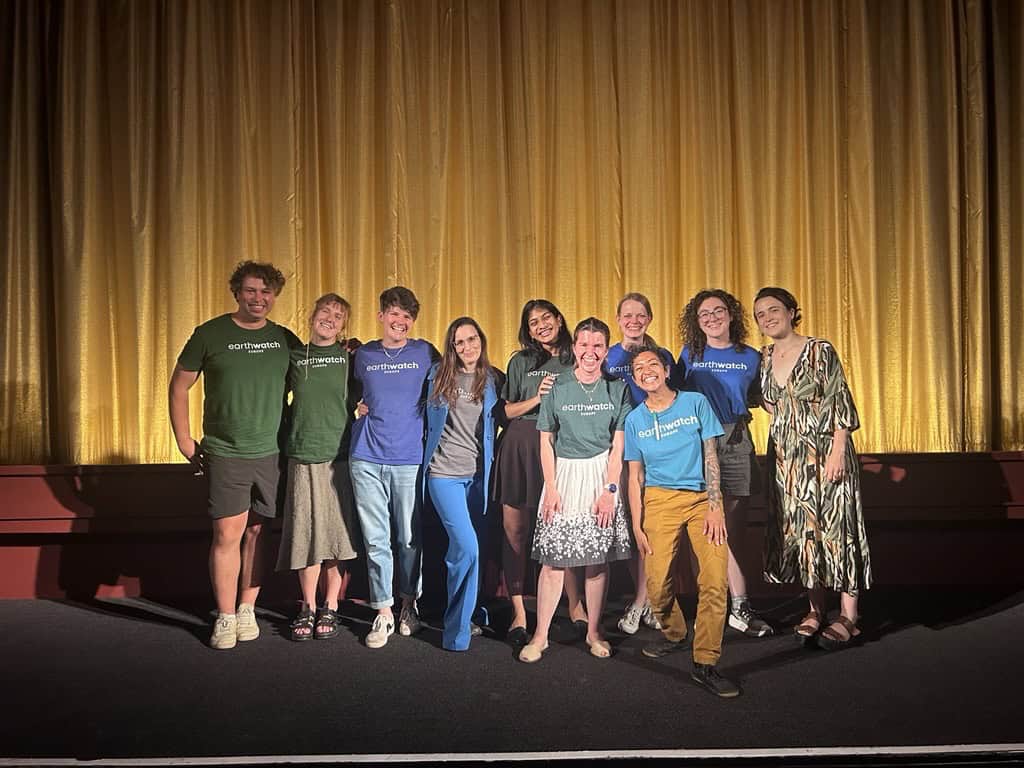
‘Once you get serious, you can make anything happen’… Tiny Forests on the silver screen at London Climate Action Week!
6th July 2026
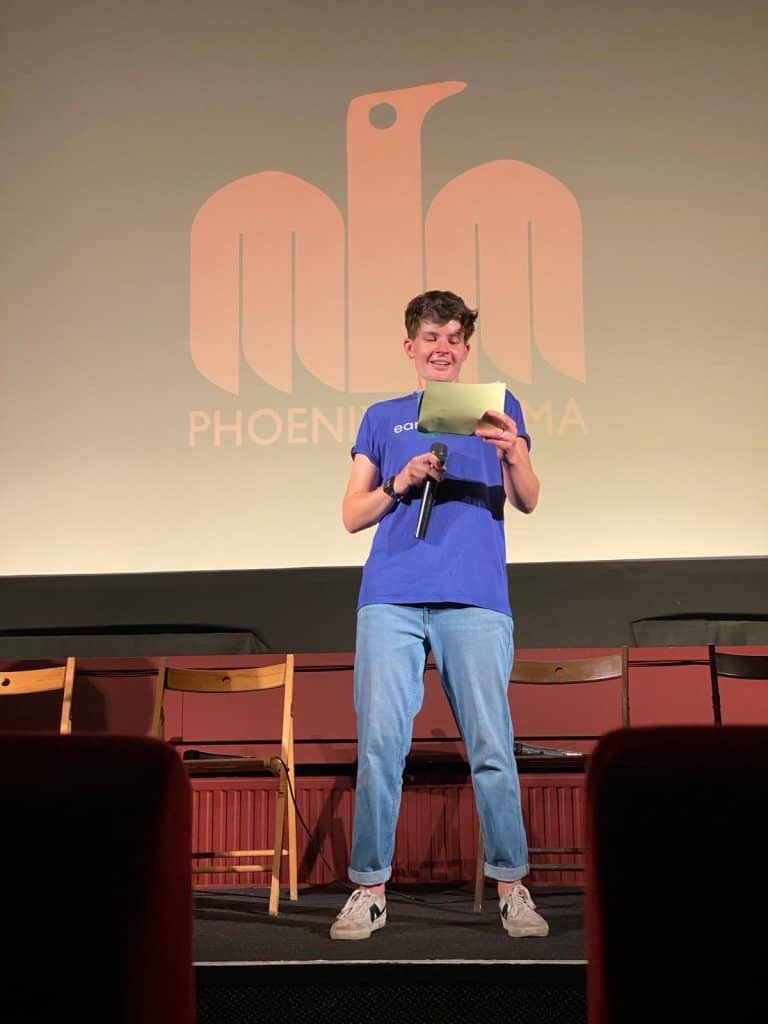
As the mercury rose on London Climate Action Week, so did the Tiny Forests! The Earthwatch Europe team were back in London, this time at Phoenix Cinema East Finchley, for a screening of ‘Making a Mini Forest’ directed by Angelina Lee. With temperatures hitting a remarkable 36°C – there seemed no time more prescient to celebrate the Miyawaki method and the support it provides our rapidly warming urban areas.
Tiny Forests can face many challenges as they grow from saplings into magnificent forests; poor weather conditions can parch the soil, or if heavy rains are sustained over long periods of time, the soil can be overwhelmed. In their junior years, when the saplings are at their most vulnerable, the rapidly growing Tiny Forests can also find themselves reliant on tree keeper support to keep looking their best.
On this occasion, the Tiny Forests featured in ‘Making a Mini Forest’ , faced a different challenge: the scorching temperatures of London Climate Action Week! With train departure boards turning red; underground lines reaching almost 40°C and members of the public issued with the once familiar refrain to stay at home – a tiny audience for our Tiny Forest screening seemed, unfortunately, on the cards.
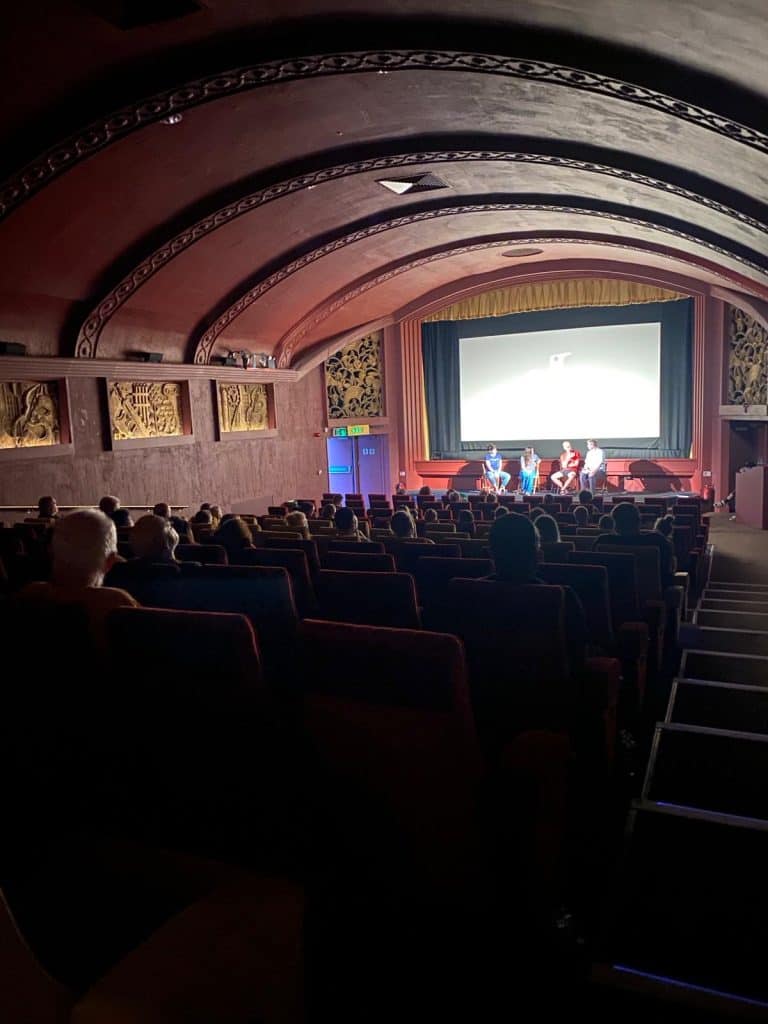
However, armed with free cold beverages, air conditioning and an eagerness to learn about the tiny solutions to humanity’s biggest challenge – over ninety members of the public were in attendance to enjoy ‘Making a Mini Forest’ and learn about the afforestation projects featured in the documentary.
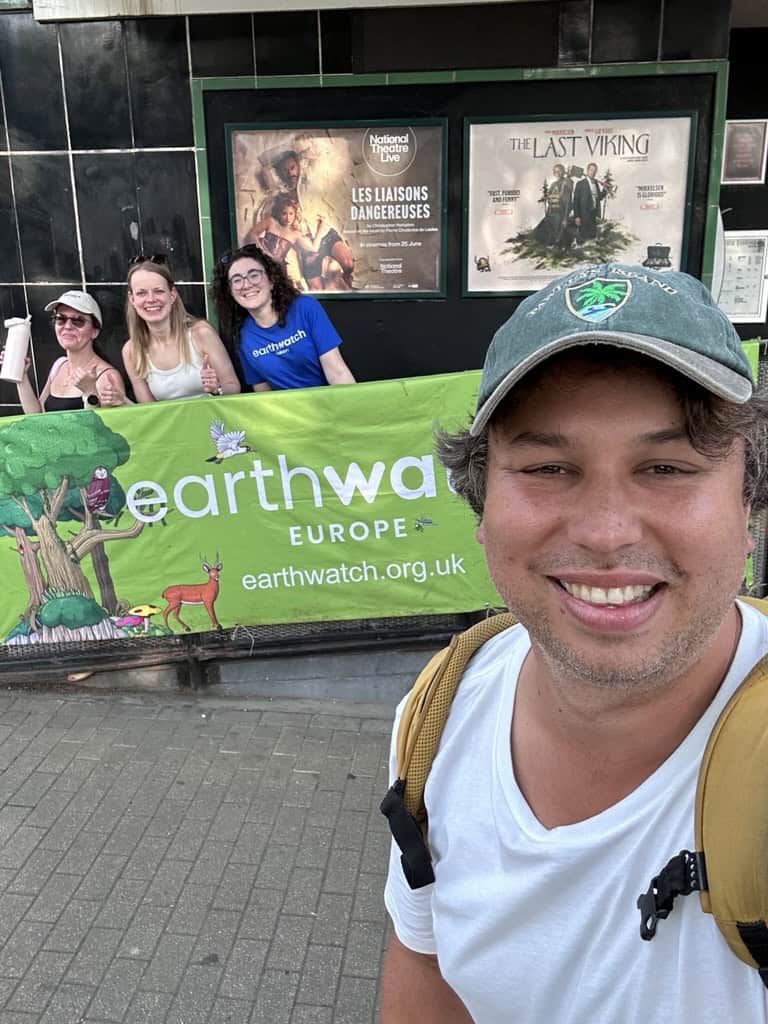
Despite the challenging conditions, the day was an overwhelming success, filled with meaningful conversations, genuine engagement, and an atmosphere that none of us will forget.
– Ewelina Sadlowska, Phoenix Cinema East Finchley
Miyawaki goes global
‘Making a Mini Forest‘ focusses on community groups from the UK, Germany, Belgium, France, Japan and the Netherlands using the Miyawaki method to cultivate forests of densely-packed native trees. Doing so means they, too, participate in the large-scale, long-term ecological experiment of the Miyawaki method while offering local communities a unique way of reconnecting with the environmental benefits of nature.
It is these environmental benefits that are measured by us at Earthwatch Europe! Through our citizen science initiatives, we test categories including soil health, thermal comfort, tree growth and levels of biodiversity.
Meanwhile, in the birthplace of the Miyawaki method, Japan, a different community approach is taken. ‘Making a Mini Forest‘ explains how local communities, following the Great East Japan Earthquake, planted Miyawaki no mori (宮脇の森) not just as mitigation against future tsunami events, but as nature-based memorials to those who have passed away.
Such is the beauty of the Miyawaki method! While its ecological principles remain consistent, its purpose is shaped by the needs, values and histories of the communities that embrace it. Whether creating healthier urban environments, strengthening biodiversity or commemorating lives lost, the Miyawaki method demonstrates how a single approach can take on different meanings across cultural and community contexts.
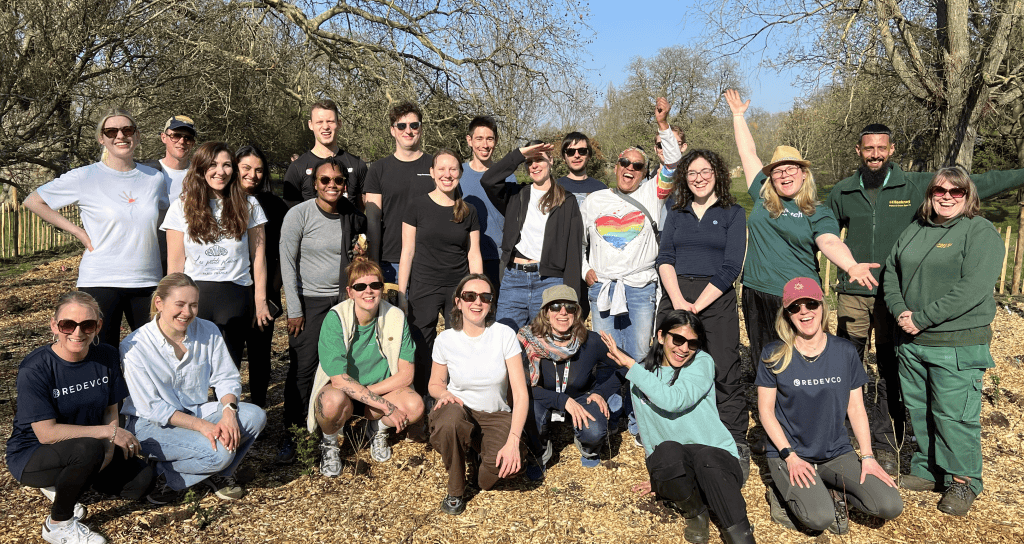
At Earthwatch, since 2020, we have planted over 300 Tiny Forests (you can learn about each and every one here!), providing thousands of people with the opportunity to connect with, and learn from, the natural world.
‘Making a Mini-Forest’ celebrates the actions of lots of different organisations…to make nature-rich spaces in response to the climate and biodiversity crises
– Dr. Emily Pennifold, Earthwatch Europe
Thanks to Phoenix and GoodGym!
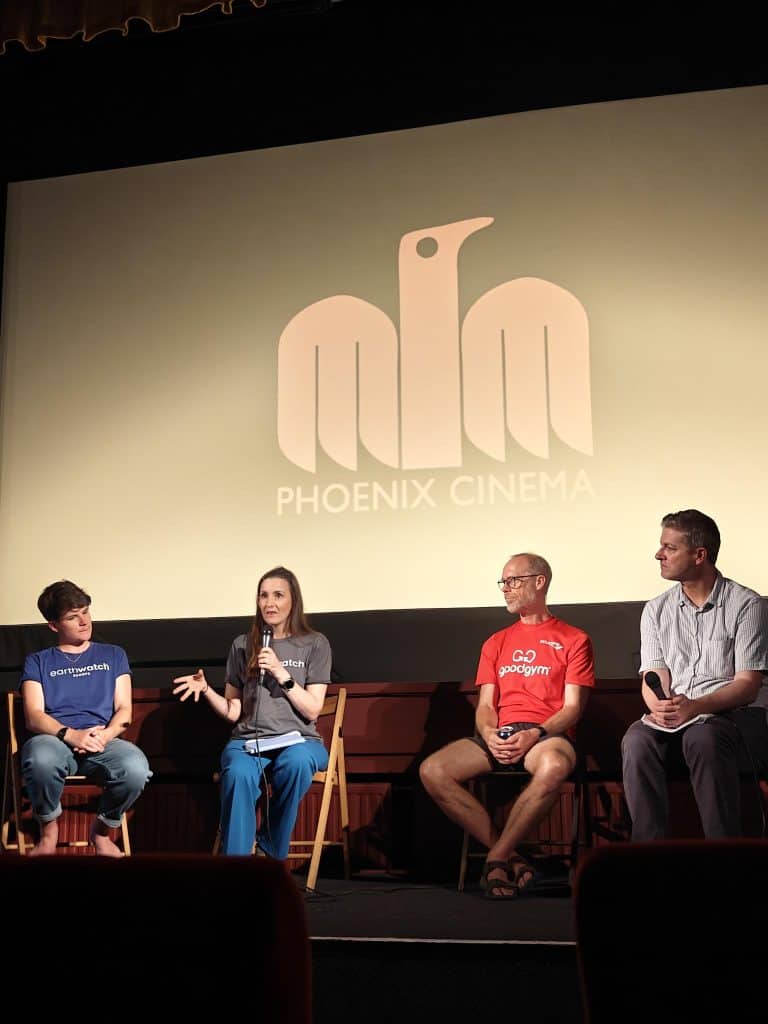
Following the screening, Earthwatch trustee Ben Wilson chaired a panel with Earthwatch staff Dr Emily Pennifold and Dr Claire Narraway, alongside Paul Salman, Area Activator for Barnet’s Tiny Forest, representing GoodGym, one of Earthwatch Europe’s partners. Together, they reflected on the different ways the Miyawaki method is being adapted across communities and the role these forests can play in creating greener, more resilient neighbourhoods.
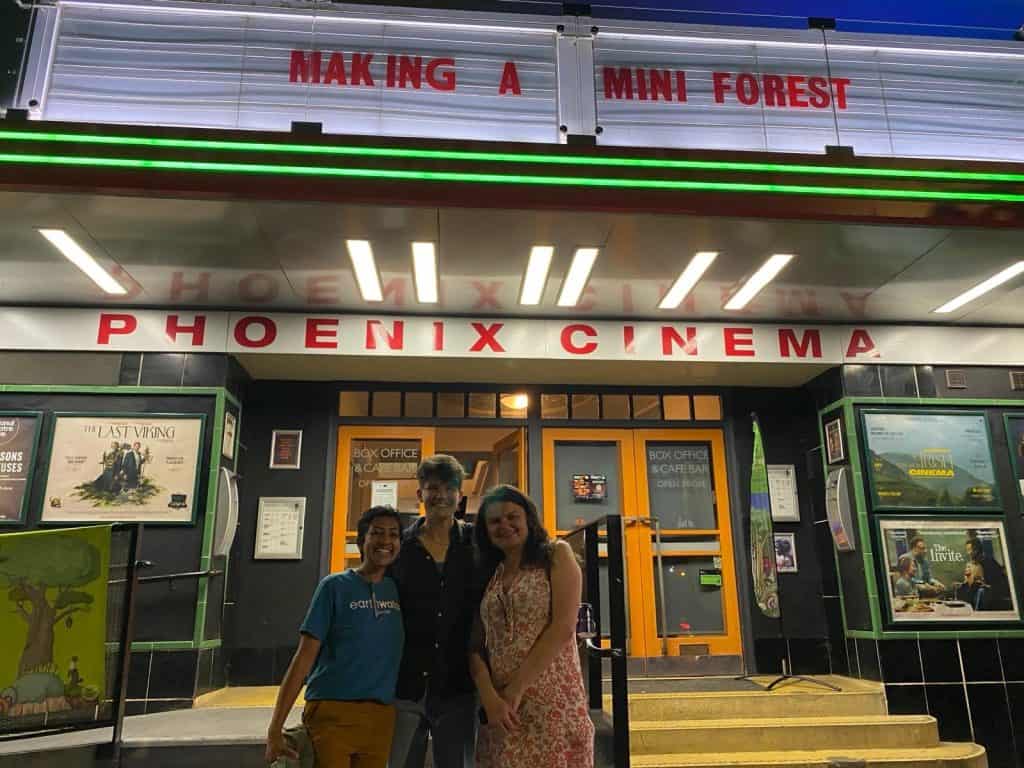
So, whether you know them as microforêts urbaines, Miyawaki no mori – or as we do at Earthwatch – Tiny Forests, it is clear that the Miyawaki method of tree planting is a rapidly growing way of re-inviting nature into our urban spaces and encouraging local communities to connect with the natural world.
We’d like to say a huge thank you to all who came to the film screening of Making a Mini Forest‘, and thank you to Phoenix Cinema East Finchley for hosting. To keep up to date with our Nature in Cities events at Earthwatch Europe, you can sign up to our mailing list.